
Quick Summary
An aesthetic home gym is a training space planned so that its equipment serves your workouts while its finishes, storage and layout make the room read as furniture rather than a gym. Start by choosing equipment for your training and footprint, then select muted finishes, durable flooring and built-in storage to keep the room calm and clean.
- Measure floor area, ceiling height and power sockets before ordering any equipment.
- Use a multi-station unit such as a power rack with Smith machine and functional trainer to cover many exercises in one footprint.
- Place a dense rubber mat or rubber tiles under the lifting area to absorb impact and reduce noise.
- Favor warm neutrals, pale wood and matte black metal, and layer ceiling light with a warm lamp.
- Keep at least a few feet of open floor on the working side of each station and confirm the floor can bear the weight.
Table of Contents
- Why Professionals Are Building Aesthetic Home Gyms
- Home Gym Ideas for Small Spaces and Apartments
- Setting the Look: Wall Finishes, Flooring, Lighting and Color
- Space-Saving Home Gym Equipment That Still Looks Good
- Home Gym Storage Ideas That Keep the Room Clean
- Aesthetic Home Gym Ideas for Professionals on a Budget
- Planning Your Setup Around Your Schedule and Your Next Step
- Frequently Asked Questions
Last Updated: November 21, 2026
Most professionals who build a home gym end up with a rack that looks like a warehouse fixture in a room they want to feel calm. A well-chosen aesthetic home gym can hold a full strength setup without dominating the room, and the design choices you make early decide whether you still use it in six months. This guide from IRONINFINITY covers how to plan a gym that suits a busy schedule, a small footprint and a home that you want to look good.
The core idea is simple: pick equipment that serves your training first, then choose finishes, storage and layout so the space reads as furniture rather than a gym. Below, we walk through the planning decisions in order, from why the setup matters to the small details that keep it clean.
Why Professionals Are Building Aesthetic Home Gyms
Many professionals give up their commercial memberships once a home setup becomes realistic. The appeal is time saved on travel, the privacy of training without queues, and a space that fits around a working day. Those same people usually care how their home looks, so an industrial-looking room becomes a daily irritation rather than a motivator.
A common mistake is buying equipment first and worrying about the room later. Measure the floor area, note the ceiling height and check where the power sockets sit before you order anything.
Home Gym Ideas for Small Spaces and Apartments
Small rooms reward multi-station equipment, but for professionals the real constraint is rarely floor area alone. It is the combination of a tight footprint, a shared building, and a schedule that leaves no room for a noisy or slow-to-set-up session. Plan the room around those three constraints and the aesthetic choices become easier. Our best home gym equipment for small rooms guide compares options sized for tight footprints.
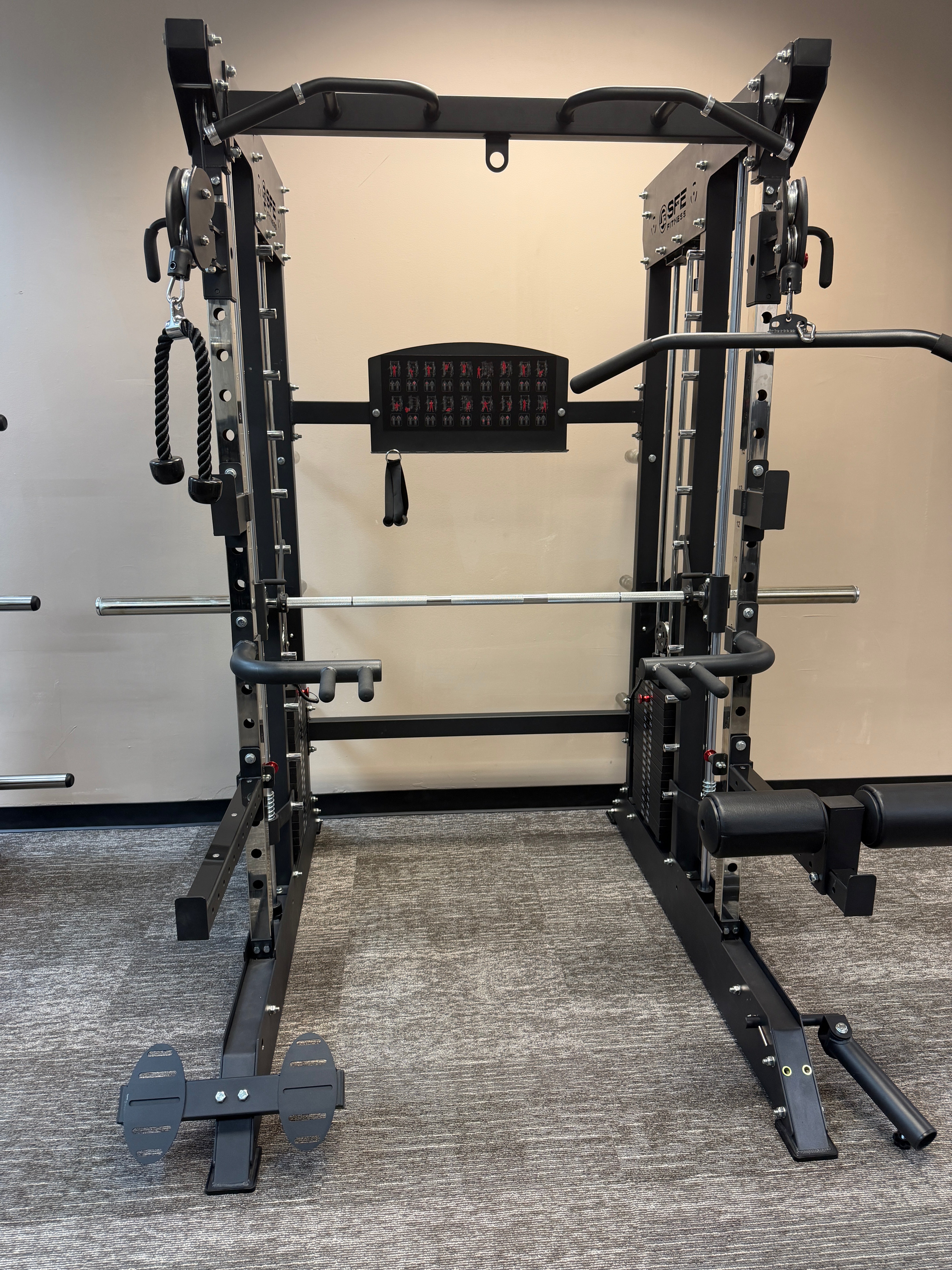
A single unit that combines a power rack, a Smith machine and a functional trainer can cover a range of strength exercises in one footprint. The All-in-One Home Gym, Power Rack w/ Smith Machine & Functional Trainer w/ 2x 220lb weight stacks is listed at approximately 72 by 82 by 88 inches, so it suits a room that can spare a clear wall and a few feet of open floor.
Noise, Vibration and Shared-Home Considerations
This is where most small-space gym guides stop short. In an apartment or a family home, the limiting factor is often sound and vibration rather than square footage. A heavy rack dropped onto a bare floor transmits impact through the structure, and a 6 a.m. session can travel further than the room it happens in.
A common pattern among practitioners is to build a layered floor: a dense rubber mat or interlocking rubber tiles under the lifting area, with a thin plywood or stable base layer beneath if the floor is uneven. Rubber absorbs impact and reduces the ringing sound of plates, while a rigid layer keeps the rack level. Felt pads under machine feet and a mat under any bench help with sliding and scuffing. If the room shares a wall with a bedroom or a neighbor, place the heaviest equipment against an exterior or load-bearing wall rather than a partition, and keep dumbbell work over the mat rather than the bare floor.
Ventilation matters in a small room, so plan a door or window that opens, or a small fan that moves air across the training zone.
For apartments, check the ceiling height and floor loading as well as the footprint. Heavier machines are best placed where the structure can carry them. Our small apartment home gym layout guide walks through practical arrangements for compact spaces.
Repurposing Basements, Garages and Spare Rooms
Basements, garages and spare bedrooms are the most common homes for a serious setup. Each has trade-offs. Basements often offer the most floor space but may have low ceilings and limited daylight. Garages are strong and easy to ventilate but can be cold and need a dust-free corner. Spare rooms have light and comfort but usually the least room to spare.
Whichever room you choose, plan a clear path to walk around each machine. Aim for enough space to step back and load a bar safely without hitting a wall.
Setting the Look: Wall Finishes, Flooring, Lighting and Color
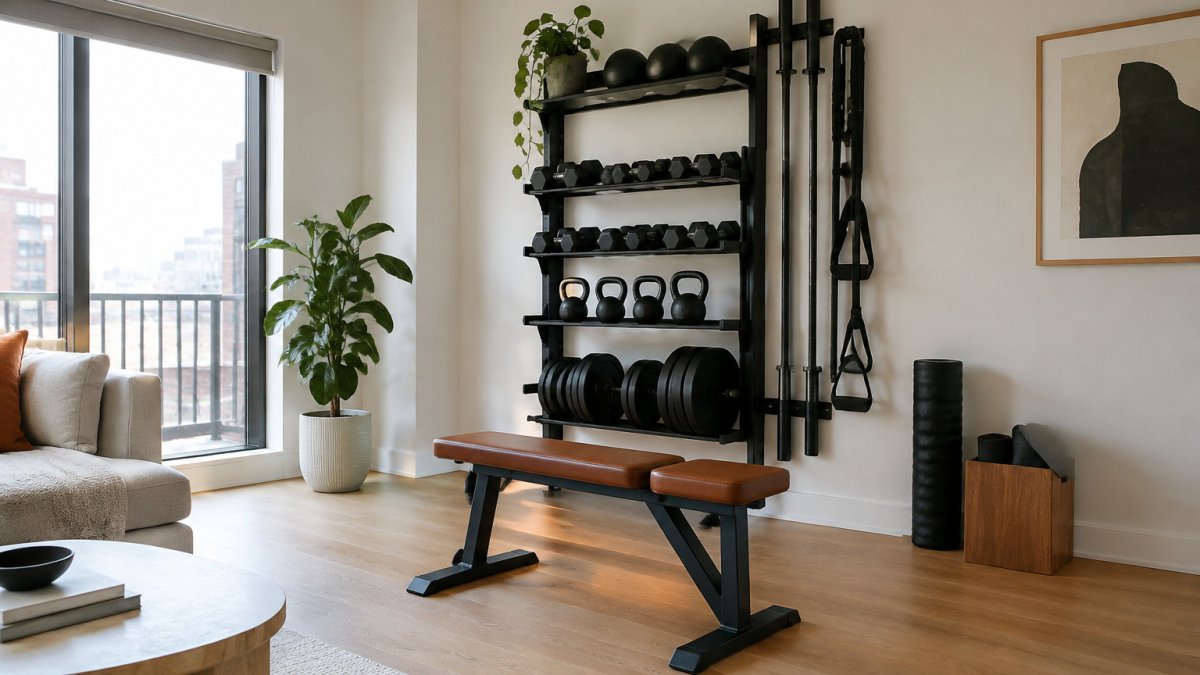
The finishes you choose shape how intentional a gym feels. A muted palette of warm neutrals, pale wood and matte black metal reads as considered. Brighter colors can work in a studio-style room, but keep the walls calm so the equipment remains the focus.
Flooring should be durable and quiet underfoot. Rubber tiles under the lifting area protect the floor, while a wood or engineered floor in the rest of the room keeps the look cohesive. Lighting matters just as much: layer a ceiling light with a warm lamp so the room looks inviting in the evening, not just functional under harsh overheads.
Space-Saving Home Gym Equipment That Still Looks Good
The SFE Selectorized Leg Extension and Prone Leg Curl Combo switches between two lower-body exercises in one compact unit, with a listed footprint of 65 by 39 by 56 inches and a 250lb weight stack.
The Selectorized Adjustable Chest / Shoulder Press uses a 200lb weight stack instead of a plate-loaded setup. For lighter accessory work, the Pure Steel Home Fitness Electroplating Dumbbell is listed at 1kg with an electroplated surface. With a weight stack and a light dumbbell covering different training needs, it helps to organize a home gym closet so each piece has a clear place and the workout area stays composed.
Heavy machines need a level, load-bearing floor. Check the specifications and confirm the floor can take the weight before installation.
The article's space-saving machines and their listed specs are summarised below.
| Equipment | Listed spec | Note |
|---|---|---|
| SFE Selectorized Leg Extension and Prone Leg Curl Combo | 65 x 39 x 56 inches | Two lower-body exercises in one unit |
| SFE Selectorized Leg Extension and Prone Leg Curl Combo | 250lb weight stack | Compact combined footprint |
| Selectorized Adjustable Chest / Shoulder Press | 200lb weight stack | Stack instead of plate-loaded setup |
| Pure Steel Home Fitness Electroplating Dumbbell | 1kg | Electroplated surface for accessory work |
Home Gym Storage Ideas That Keep the Room Clean
Storage helps keep a gym organized. Plate storage posts built into a rack can keep weights off the floor and within reach.
The Commercial Squat Rack w/ Safety Bars, J-Hooks & Weight Storage includes built-in weight storage posts. Stack bands, mats and straps in a labeled basket or a closed cabinet, and keep one spot for your water bottle and towel. A clean room is easier to train in, which keeps the habit going.
Aesthetic Home Gym Ideas for Professionals on a Budget
A premium look does not require buying everything at once. Start with the piece you will use most, usually a rack or a bench, and add stations as your routine grows. Choose finishes that are easy to replace, such as a painted wall or a rug, so the room can change without a full redesign.
Budget also means thinking about total cost. Multi-station machines can replace several single-purpose pieces. Compare what you actually need against what looks impressive in photos.
Planning Your Setup Around Your Schedule and Your Next Step
Your gym should fit the hours you can actually train, and for most professionals that means short, repeatable sessions rather than long weekend workouts. The design decision that matters most is how quickly you can move from work mode to training mode and back. A room that takes ten minutes to clear, set up and cool down will lose to a room that takes two.
Map out your week first, then decide whether you need quick sessions that take twenty minutes or longer workouts on weekends. Equipment placed within reach of your starting point gets used more often than gear buried in a corner. A rack with built-in storage, a bench that stays in place, and a single accessory station cover a full session without rearranging the room.
Work-From-Home Integration
A home gym that coexists with a home office needs visual separation as much as physical separation. Placing the desk and the rack on opposite walls can help keep the training zone visually separate from the office area.
Convertible layouts can help a room serve more than one purpose. If the gym shares space with a guest room, choose equipment with a small footprint and a neutral finish so it reads as furniture when not in use. Keep cables and mats in one labeled spot so the floor clears quickly between calls.
Ergonomics and Injury-Conscious Planning
Appearance should not come at the cost of safe movement. Leave enough clearance to step back and load a bar, to get up from a bench, and to walk around the rack without ducking. A common pattern is to keep at least a few feet of open floor on the working side of each station and to avoid placing equipment where a door swings into the training zone.
A stable, level surface under the rack can help keep the frame steady. Ventilation and temperature are also worth considering in a small room, where a fan or an open door can make short sessions more comfortable.
Watch out: heavy machines need a level, load-bearing floor, and a rack placed on an uneven surface can rock under load. Check the specifications and confirm the floor can take the weight before installation.
If a home studio fits your routine, start by sketching the room, then shortlist one multi-station machine and one accessory. Browse the full All-in-One Home Gym and the other selectorized machines in the IRONINFINITY range, and pick the setup that matches your floor space and your schedule.
Frequently Asked Questions
How can I make a home gym look aesthetic?
Start with a restrained palette of two or three colors, such as black steel, warm wood and off-white walls, and keep equipment finishes consistent. Choose a flooring that reads as intentional, like light wood or rubber in a neutral tone. Warm, layered lighting and one or two plants or a mirror panel make the room feel finished rather than utilitarian. Hide cables and store small accessories out of sight so the equipment, not the clutter, is what people see.
How do I create a home gym in a small space?
Choose multi-function equipment first, such as the All-in-One Home Gym with a power rack, Smith machine and functional trainer, which combines several stations in one footprint. Measure the room and allow clearance around the equipment for safe movement, not just the machine's footprint. Mirrored or light-colored walls make a small room feel larger. Plan one clear zone for training and keep the rest of the room free of obstacles.
What equipment should a professional include in a home gym?
Prioritize a stable rack or multi-function unit, an adjustable bench, a set of dumbbells and a cardio option that fits your schedule. The Elite Connected Spinner Bike is one cardio option to consider. A selectorized machine such as the Adjustable Chest and Shoulder Press adds progression without loading plates. Start with the movements you already do most, and add equipment as your routine becomes consistent.
How can I keep a home gym organized and clutter-free?
Assign every item a fixed home: plates on weight storage posts, dumbbells on a rack, bands and small accessories in a closed bin or drawer. Store the things you use every session within arm's reach and move occasional items out of the training zone. A squat rack with integrated weight storage, such as the Commercial Squat Rack, includes built-in weight storage posts. Wipe down equipment after each session so the room stays presentable.
